
Batavia City Directory Shelf
Batavia's historical directory trail begins with scattered early volumes and becomes much steadier in the twentieth century. The local pages confirm holdings, not a complete scanned run. Most directory use therefore begins at the library or historical society. Researchers should ask for a precise year and inspect the physical volume's title page and key before assigning a publisher or abbreviation.
| Collection | Years | Where held | Access |
|---|---|---|---|
| Assorted Batavia directories | Earliest 1857; specific 1859-60 material | Gustafson Research Center | In person during museum hours; appointment or email request |
| Tri-City city directories | 1910 to present | Batavia Public Library Local History Room | Primarily in-library use |
| Batavia telephone directories | 1916-1956 | Batavia Public Library | In-library use |
| Telephone books and local directories | Especially the 1920s; assorted years | Gustafson Research Center | In person or research request |
| Local newspapers and yearbooks | Runs vary by title | Library, Historical Society, Batavia History | Microfilm, physical holdings, and selected free digital collections |
An older finding aid describes the Tri-City shelf at roughly three-year intervals and names Polk and later Batavia or Haines material, but it is only a 1999 snapshot. It also noted a missing 1990 volume at that time. Verify the present shelf rather than turning that bibliography into a firm publisher-by-year claim.
Use Batavia Library Directory Holdings
The Batavia Public Library Local History Room is at 10 S. Batavia Ave. Its listed hours are Sunday noon to 5 p.m., Monday through Thursday 9 a.m. to 9 p.m., and Friday and Saturday 9 a.m. to 5 p.m. Most local-history items stay in the library. Call 630-879-1393 before a long visit when a particular city directory year matters.
The room brings useful companion sources within one search session: Batavia Herald microfilm for 1893-1976, Batavia Chronicle for 1976-1990, Kane County Chronicle from 1990 forward, Batavia High School yearbooks from 1912 forward, marriage records for 1836-1906, naturalization records for 1857-1955, cemetery guides, atlases, and plat books.
Its Kane census microfilm covers 1840, 1850, 1860, 1870, 1900, 1910, 1920, and 1930. These rolls do not replace city directories. They offer a second snapshot with household relationships and ages under census rules, which can test whether a same-name listing belongs to the right family.
Batavia Directories at Gustafson
The Batavia Historical Society's Gustafson Research Center holds the earliest confirmed directory material. The center is at 155 Houston St. and lists 2-4 p.m. hours Monday, Wednesday, Friday, Saturday, and Sunday from March through Thanksgiving. An appointment is recommended, and research questions can be sent to museum@bataviaparks.org.
The local city directory shelf sits beside more than 800 family histories, structure histories, abstracts, circuit and probate records for Batavia and Batavia Township from 1860-1960, telephone books, census indexes, maps, yearbooks, clippings, and church records. That arrangement makes it possible to test a name against a building or estate record without treating a directory listing as final proof.
The park district's research-center description also reports more than 10,000 photographs and no charge for research requests.
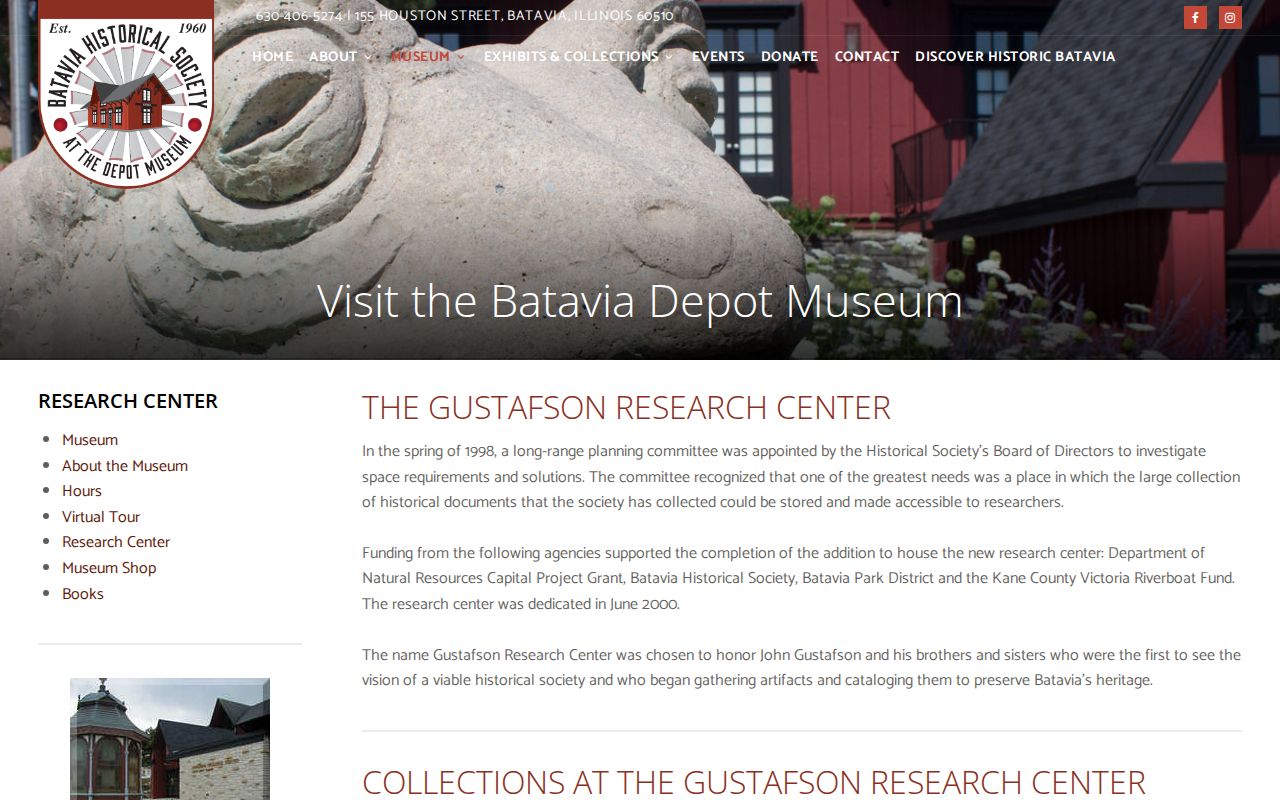
The captured center page is a finding aid for physical holdings, not an online directory-name search.
Read a Batavia City Directory Entry
Begin with the volume's own abbreviation key. The research did not locate a publicly viewable Batavia entry, so no local symbol should be guessed. Transcribe only what the page prints. A typical inspection checks the surname and given name, initials, spouse or widow notation, occupation or business, street and house number, telephone listing, and any owner, renter, householder, or residence mark defined in that edition.
| Name form | Exact surname, given name, initials, punctuation, and variants |
|---|---|
| Family notation | Spouse or widow wording only when printed |
| Work label | Occupation or business as a dated identity clue |
| Place | Street, house number, city label, and page |
| Status mark | Householder, residence, owner, renter, or boarder only as the key defines it |
| Source state | Physical entry, index, image, OCR text, or staff response |
- Criss-cross directory
- A directory or section arranged by street and house number rather than surname.
- Householder index
- An address-based listing centered on the named person associated with a household.
- Abbreviation key
- The volume's legend explaining shortened terms and symbols; record it with the entry.
A telephone subscriber is not the same as every person in a home. Likewise, a spouse note or occupation is evidence from that year, not a permanent fact.
Search Batavia History Beside Directories
Batavia History's digital collections do not expose a confirmed scanned city directory run, but they can supply the dated context needed to explain an entry. Searchable resources include Batavia Herald issues from 1930-1969, Batavia Republican issues from 1990-2000, Windmill publications from 1982-1998, Civil War letters and diaries, and selected yearbooks.
Batavia Township records are browsable from 1874-1969 and searchable from 1936-1969. City Council minutes cover the same broad span, with searchable text from May 1915-1969. A city-officers list reaches from 1891-2019. Search a surname, exact street, business name, church, obituary, legal notice, or civic event, then verify optical character recognition against the page image.
A newspaper address may explain why a person disappears between directory years. It can document a move, death, marriage, business change, or public event. Record the paper title, issue date, page, and exact wording.
Batavia Directory Years in Context
The strongest local story is the span between the Historical Society's early material and the Library's long Tri-City run. The gaps are real research questions, not an invitation to infer absence.
| Date | Confirmed Batavia research landmark |
|---|---|
| 1857 | Earliest city directory reported by the Batavia Historical Society |
| 1859-60 | Specific Batavia City Directory material named by the Society |
| 1910 | Start of the Library's Tri-City city directories |
| 1912 | Start of the Library's Batavia High School yearbook holdings |
| 1916 | Start of the Library's Batavia telephone directory run |
| 1956 | End of that listed telephone directory run |
| Present | Library describes its Tri-City directory holdings as continuing to the present |
To bridge 1857 to 1910, use census years, newspapers, deeds, probate files, structure histories, and plat material. A missing volume or unlisted year means only that the checked source did not supply the entry.
Trace Families in Batavia Directories
Choose a directory year close to a known event. Search the surname alphabetically, then check the street section if the volume has one. The Tri-City format matters because a family may move between Batavia, Geneva, and St. Charles without leaving the region.
- Copy the exact name, address, year, page, entry type, and abbreviation key from the first solid listing.
- Check the nearest earlier and later directory volumes, noting moves, initials, spouse marks, and business labels.
- Pair the trail with the nearest available Kane census year and compare ages, relationships, and work with care.
- Use telephone books from 1916-1956 to bridge a directory gap, while labeling the result as a subscriber listing.
- Test the address with a newspaper, deed, plat, structure history, probate file, or obituary.
When a name vanishes, check spelling variants, initials, former names, nearby cities, and the next available year. A disappearance can reflect a move, a death, a missed edition, an unlisted phone, or a publication gap. It is not proof of any one event.
Verify Batavia Directory Names
The Kane County Clerk genealogy index can test a historical directory name against older birth, marriage, and death entries. The researched coverage begins with births in 1855, marriages in 1836, and deaths in 1866, subject to age and access rules. A free account supports searching and eligible historical image access.
The portal screenshot shows the official genealogy search surface used to move from a directory lead to a recorded event.
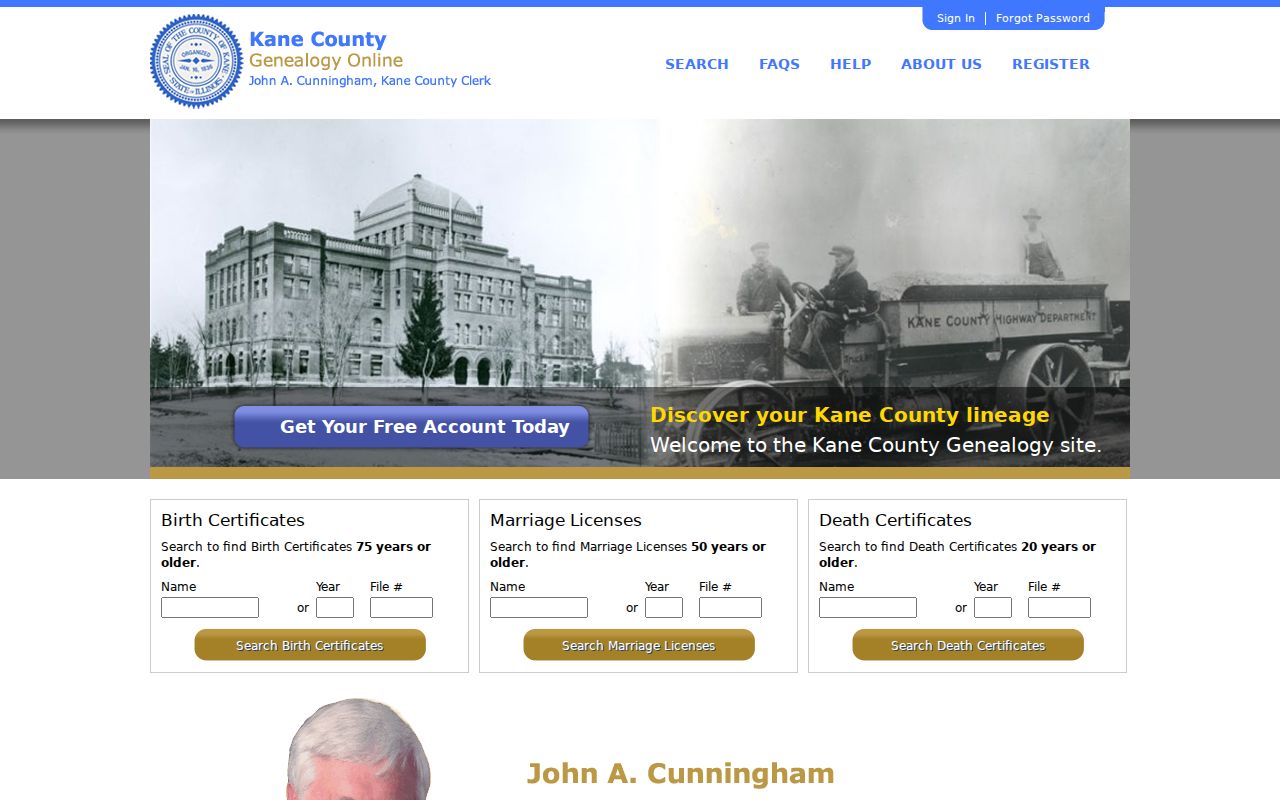
Try exact spellings, initials, and Soundex variants. An index entry is not the same as unrestricted certificate access, and recent vital records remain subject to Illinois eligibility rules.
For a modern address-based question, use the Batavia street directory workflow instead of forcing an old shelf source to answer a current occupancy question.
Cite Batavia City Directories Carefully
A useful citation preserves publication title, city coverage, year, page, exact spelling, address, and the condition in which the record was seen. Note whether the evidence came from a physical page, microfilm, an index, OCR text, a digital image, or a staff response. If the page key defines a symbol, copy or photograph that key with the entry.
Keep a search log of surname variants, street forms, years checked, and sources with no result. Search Batavia, Batavia Township, Tri-City, Kane County, and older postal labels where the collection warrants it. For street names, test direction and type both as printed and in a modern form.
Research tip. Copy an old address exactly before comparing its lot, block, legal description, map structure, and deed date with a modern location.
That record trail separates evidence from inference. It also gives the library, Historical Society, Recorder, or clerk enough detail to reproduce the request when a volume or image is not online.